
Review Vault may receive affiliate payouts when purchases happen via links throughout this site, without creating extra expense for our readers. Our scoring remains completely independent.
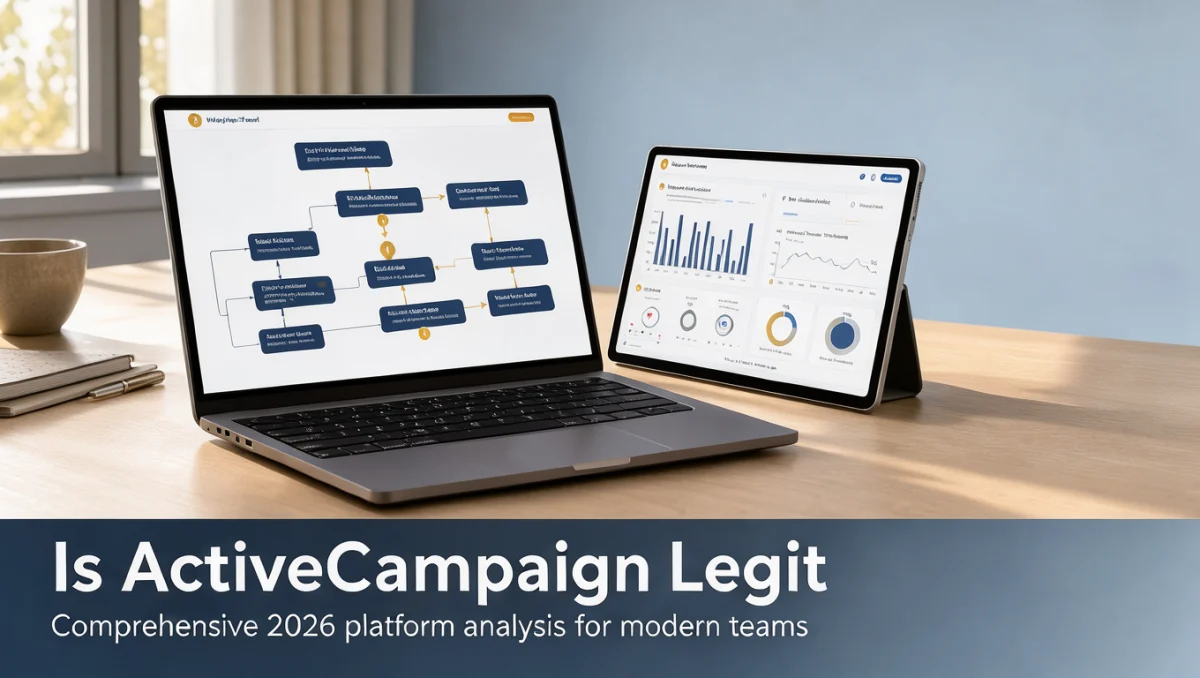
Organizations frequently ask: is activecampaign legit when looking for dependable audience outreach tools and automated lead sequences? ActiveCampaign functions as an established customer experience automation suite that combines targeted email blasts, contact segmentation, and dynamic deal pipelines within a coordinated hub. For professionals browsing the broader Marketing landscape, vetting a platform's stability and infrastructure before importing extensive customer records represents a fundamental risk-mitigation step.
Modern contact management requires balancing behavioral triggers, list maintenance, and team technical capability. In this detailed appraisal, Review Vault examines how the software performs, highlights where it delivers the highest return, and identifies what technical buyers must check before investing time and budget.
Summary judgment: Earning an overall mark of 7.8 out of 10, ActiveCampaign stands out for scaling teams requiring branching automation trees and comprehensive contact histories. Conversely, solo creators seeking basic, one-click text announcements without workflow setups will find it overly complex.
| Evaluation Factor | Overview |
|---|---|
| Review Vault Rating | 7.8 / 10 |
| Target Audience | Expanding marketing departments and commercial teams wanting multi-stage automation paired with centralized lead records. |
| Less Suited For | Individual creators and occasional broadcasters seeking straightforward newsletter tools without multistep automation. |
| Core Capabilities | Visual sequence builder, dynamic contact histories, unified inbox management, and automated deal stages. |
| Pre-Purchase Check | Consult the official ActiveCampaign pricing portal to review subscriber brackets, monthly dispatch limitations, and team seat allocations. |
Our Assessment Framework
Our review process scrutinizes ActiveCampaign across core operational dimensions: functionality, user interface navigation, cost-to-value ratio, external integrations, target audience suitability, customer assistance, and market competitiveness. Because subscription models and system constraints shift frequently, buyers should always verify current plan details on the official website before subscribing. This critique was developed with AI assistance and subsequently validated by our internal editorial specialists.
Platform Overview: Target Audience and Purpose
At its heart, ActiveCampaign acts as a customer experience automation engine unifying sales pipelines, email delivery, and triggered behavior tracking. The platform empowers businesses to log subscriber milestones, dispatch bespoke message flows tailored to web activity, and maintain unified customer profiles across sales and service teams.
When deciding if the software fits your operational stack, you must gauge your team's readiness for data-driven nurturing. The solution targets expanding businesses, commercial agencies, and inbound marketing experts focused on structured customer journeys. Companies bridging the gap between promotional campaigns and direct sales rely on this setup to automatically hand off qualified prospects to sales reps.
Key Functionality and Capabilities

ActiveCampaign organizes its toolkit around customer behavior, logic branches, and omni-channel contact methods to streamline prospect interaction.
Email Creation and Broadcast Tools
Subscribers can design customized email layouts, plan broadcast dates, and dispatch targeted updates to refined audience groups. With an intuitive visual layout editor, users can drop in dynamic merge tags to tailor copy for each recipient, followed by tracking delivery metrics, opens, and link clicks.
Drag-and-Drop Workflow Canvas
The visual workflow designer empowers users to construct elaborate customer roadmaps utilizing conditional paths, wait buffers, and milestone benchmarks. Whenever a subscriber performs a tracked event—like browsing a high-intent landing page or submitting a contact form—the engine can trigger personalized emails, assign engagement tags, or notify internal personnel.
Subscriber Profiles and Behavioral Grouping
ActiveCampaign keeps detailed records for every contact, storing custom attributes, behavioral logs, and engagement markers. Senders can build precise audience filters combining past email interactions, buyer demographics, and web behavior to keep messaging relevant.
Sales Opportunity and Pipeline Management
Integrated pipeline tools help commercial teams monitor prospective deals through distinct transaction milestones. Team members can schedule follow-up tasks, store call logs, and let automated workflows advance opportunity stages as prospects engage with marketing materials.
Interface Usability and Onboarding Curve
Because ActiveCampaign packs expansive functionality under the hood, first-time administrators face a moderate learning phase. Drafting a simple newsletter is quick, but assembling multi-branch automation maps demands meticulous tagging rules, data structure planning, and pre-launch testing.
Complex conditional logic requires teams to create systematic naming protocols early. Businesses with dedicated growth personnel generally master the interface rapidly, whereas solo founders without technical experience might find the wide array of settings overwhelming during initial onboarding.
Weighing the Strengths and Weaknesses
Balancing operational benefits against daily hurdles clarifies whether this solution fits your current business stage.
Platform Advantages
- Powerful workflow logic handles complex conditional routing, time delays, and activity triggers.
- Centralized data records merge promotional email metrics with commercial deal milestones.
- Advanced audience filtering allows highly granular segmenting via custom tags and past interaction logs.
- Extensive pre-built template libraries help teams launch automated customer flows rapidly.
Platform Drawbacks
- The sheer scope of features generates a steep learning curve for automation beginners.
- Ongoing costs increase substantially as audience sizes scale, demanding regular database pruning.
- Initial platform configuration requires dedicated setup time for custom fields, tagging systems, and logic testing.
Competitive Positioning and Alternatives

Comparing ActiveCampaign with alternative software reveals its position across the broader martech ecosystem.
| Solution | Core Focus | Ideal User | Primary Trade-off |
|---|---|---|---|
| ActiveCampaign | Multi-branch workflows and pipeline tracking | Teams requiring automated lead journeys alongside unified CRM data | Demands ongoing management and clear data hygiene |
| Mailchimp | Straightforward newsletters and entry-level outreach | Small brands needing uncomplicated email broadcasts | Workflow builder offers less flexibility for advanced logic |
| HubSpot | Full-funnel inbound marketing and enterprise CRM | Mid-market to enterprise firms seeking cross-departmental unification | Higher price tiers demand substantial recurring investment |
| Klaviyo | E-commerce automation and purchase tracking | Online merchants prioritizing retail transaction data | Less adapted for B2B service firms needing deal stages |
Organizations needing only basic monthly announcements typically lean toward lightweight newsletter tools. In contrast, businesses operating consultative sales cycles or structured customer onboarding extract immense value from ActiveCampaign's flexible workflow logic.
Ideal Users vs Who Should Look Elsewhere
Matching system traits with your team's internal resources avoids costly implementation mistakes.
Recommended Use Cases
- Expanding Marketing Groups: Teams demanding intricate conditional sequences, dynamic tagging, and multi-step lead journeys.
- B2B Service Organizations: Companies needing direct synchronization between marketing engagement signals and pipeline deals.
- Marketing Agencies: Service firms deploying lead qualification funnels and nurturing workflows for clients.
- E-Commerce Brands: Digital storefronts looking to trigger personalized follow-ups using subscriber behavior.
Who Should Consider Alternatives
- Casual Senders: Community groups or creators who send simple text updates without sequence automation.
- Teams Needing Zero Configuration: Operators without internal capacity to set up custom data fields, tags, and workflow conditions.
Plan Selection and Cost Drivers
Software providers calibrate pricing according to database size, feature tiers, and team logins. Prospective buyers should review these factors on ActiveCampaign's official pricing portal before choosing a plan.
| Pricing Factor | Operational Significance |
|---|---|
| Database Thresholds | Platform tiers scale as total subscriber volume rises, making database size your primary cost driver. |
| Team Seat Allowances | Specific packages cap simultaneous administrator logins, which may require buying seat add-ons. |
| CRM Pipeline Inclusion | Dedicated deal management and pipeline capabilities are restricted to specific plan tiers. |
| Monthly Send Volumes | Check for monthly dispatch limits associated with your contact bracket and planned campaign tempo. |
Common Questions Answered
How should a company audit contact lists before migrating?
Businesses ought to scrub their subscriber records to eliminate inactive accounts, previous bounces, and unengaged contacts prior to importing. Since subscription fees rise as database sizes cross pricing brackets, clean data directly protects your bottom line.
What planning is recommended before designing automated workflows?
Sketch your subscriber pathways on paper or a digital diagram prior to building inside the tool. Outlining trigger points, delay buffers, content assets, and conversion criteria beforehand eliminates logic loops and keeps journeys running smoothly.
What separates automation platforms from standard newsletter software?
Standard newsletter tools primarily push single announcements to an entire list at a chosen time. Automation software observes live recipient activity, triggering tailored communications based on user behaviors, elapsed intervals, and profile adjustments.
What extra factors influence the total cost of ownership?
Beyond recurring software charges, real-world costs can encompass graphic design templates, integration tools, team training sessions, and third-party list verification software. Factoring in these elements ensures accurate operational budgeting.
Final Assessment
ActiveCampaign delivers an agile, battle-tested automation and CRM ecosystem for organizations seeking to streamline touchpoints across the customer lifecycle. By bridging sophisticated sequence logic with integrated deal tracking, the software enables teams to run targeted campaigns while preserving organized prospect histories.
| Assessment Category | Score (out of 10) | Rationale |
|---|---|---|
| Features | 8.5 / 10 | Robust conditional sequencing, visual workflow builder, and integrated deal management. |
| Ease of Use | 7.0 / 10 | Expansive settings and complex logic create an undeniable onboarding learning phase. |
| Pricing and Value | 7.5 / 10 | Offers rich functionality for scaling teams, though expenses climb alongside contact growth. |
| Integrations | 8.0 / 10 | Connects smoothly with leading web forms, shopping carts, and daily business software. |
| Audience Fit | 8.5 / 10 | Superb match for scaling brands, consultancies, and growth marketers using behavioral data. |
| Customer Support | 7.0 / 10 | Available support channels and speed depend on the purchased subscription tier. |
| Competitive Position | 8.0 / 10 | Holds an impressive market rank by pairing deep automation logic with accessible visual design. |
Overall Review Vault Score: 7.8 / 10
For companies seeking to establish disciplined lead qualification, automated workflow paths, and smart audience segmentation, ActiveCampaign provides a dependable and robust software foundation in 2026. Teams should audit their active contact counts and review plan tiers on the official ActiveCampaign website to align functionality with their operational objectives.