
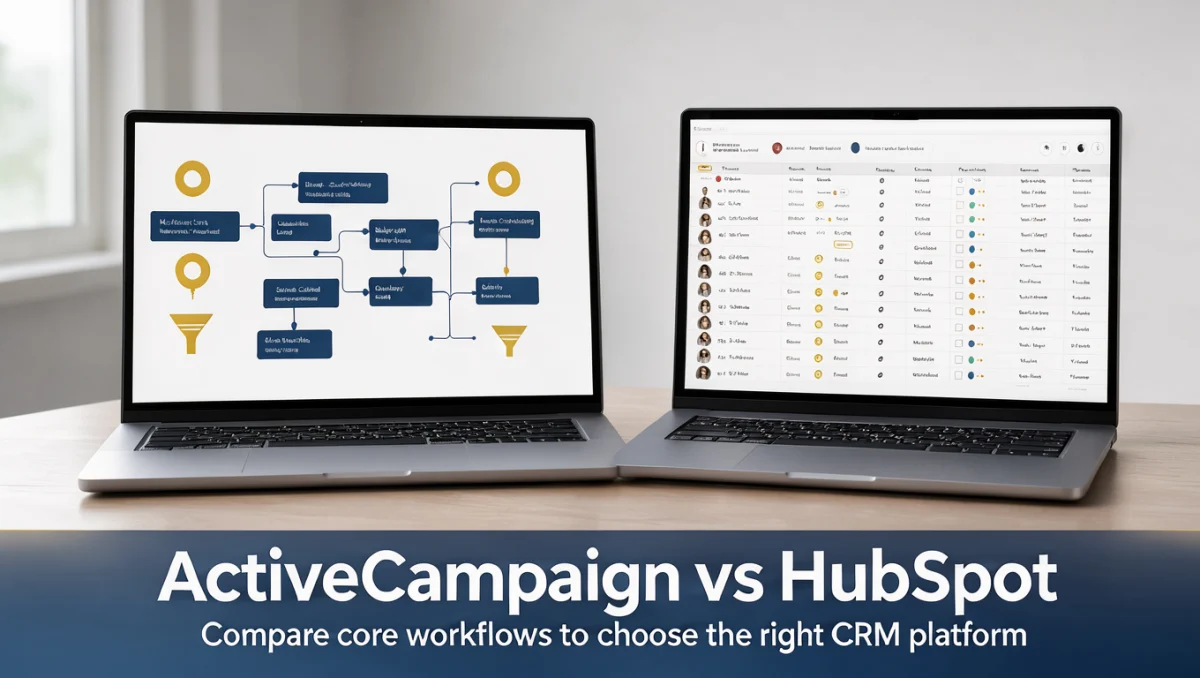
Deciding between leading marketing platforms frequently comes down to choosing between specialized communication builders or centralized commercial databases. In our thorough evaluation of activecampaign vs hubspot, both solutions present compelling toolsets designed around divergent operational philosophies.
Organizations with heavy nurture demands often favor dynamic sequence logic, whereas cross-functional groups require holistic visibility connecting support requests, pipeline phases, and lead acquisition within a single source of truth.
Executive Summary: The head-to-head evaluation yields a composite rating of 8.0/10. ActiveCampaign shines when granular, trigger-based communication paths drive business revenue. Conversely, HubSpot excels at merging deal governance, client ticketing, and acquisition analytics under one unified roof. Basic newsletter senders without dynamic logic will find both alternatives over-engineered.
| Evaluation Metric | Platform Assessment |
|---|---|
| Overall Rating | 8.0 / 10 |
| Optimal Deployment | Organizations combining targeted message sequencing with structured prospect tracking |
| Unfavorable For | Independent creators seeking straightforward, static bulletin distributions |
| Prominent Capabilities | Visual campaign builders, contact tracking, pipeline management, and contact segmentation |
| Pre-Purchase Advisory | Review published vendor resources to verify seat assignments, contact caps, and onboarding prerequisites |
Evaluation Framework and Methodology
Our assessment analyzes architectural design, target demographics, and market positioning utilizing seven distinct benchmarks: functionality, user experience, total investment value, ecosystem connectivity, user suitability, vendor assistance, and industry standing. Because subscription frameworks evolve, verifying current terms on official channels remains essential. Our research is conducted with editorial rigor by the specialist team at Review Vault.
Fundamental Architectural Distinctions
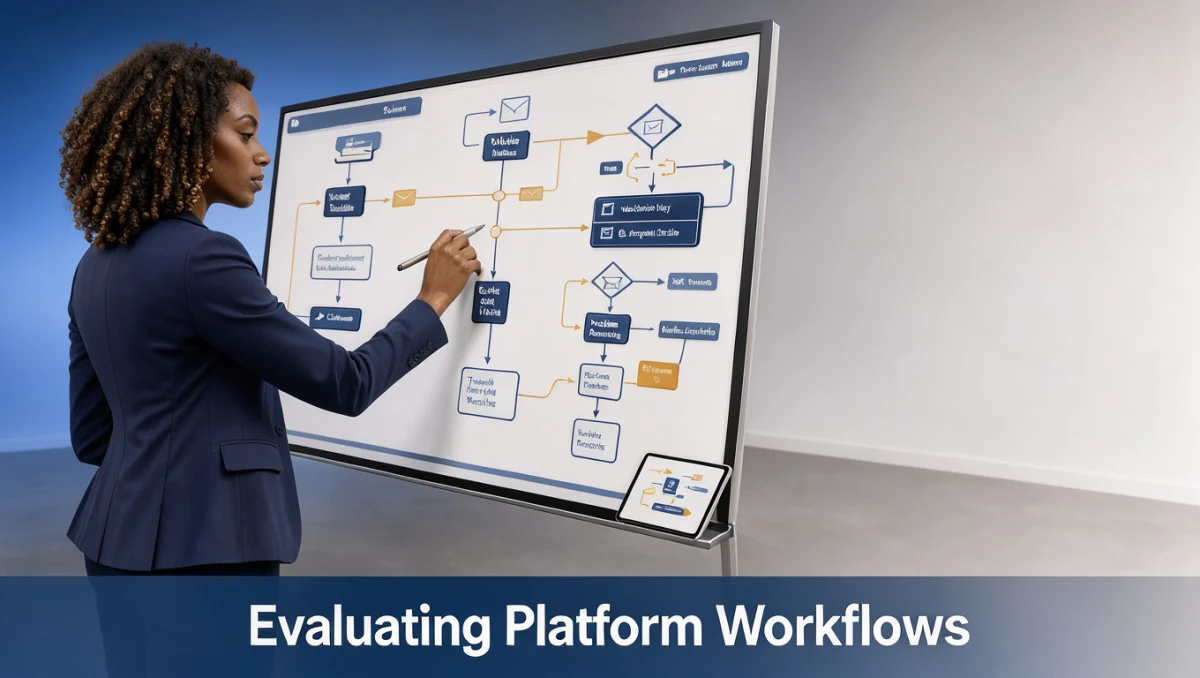
ActiveCampaign constructs its environment around conditional customer experience logic. It functions as an advanced customer journey engine where dynamic branches, interaction tags, and automated updates dictate subscriber experiences.
HubSpot approaches operations through a centralized CRM repository linking commercial operations. It unifies prospect acquisition, pipeline stages, customer support queues, and CMS assets in an interconnected corporate ecosystem.
Navigating software options within the competitive Marketing sector requires identifying whether your operational focus emphasizes behavioral messaging journeys or multi-departmental visibility across sales and client management.
Platform Positioning Matrix
While both applications accelerate business growth, their entry points address different bottlenecks. The matrix below highlights their core structural focus.
| System | Target Audience | Primary Strength | Selection Trigger |
|---|---|---|---|
| ActiveCampaign | Teams focused on detailed email sequences and contact interaction triggers | Multi-step visual workflow builders and granular customer segmentation | Your business model relies on automated subscriber nurture paths |
| HubSpot | Organizations wanting centralized contact records across sales and service | Unified customer database connecting lead generation with deal tracking | Your team prioritizes unified visibility across distinct company roles |
Detailed Criteria Evaluation
Functional Capabilities
ActiveCampaign specializes in intricate, multi-layered branching trees. Campaign architects configure triggers utilizing browsing habits, campaign clicks, and profile parameters, synchronizing prospect movement automatically across integrated sales pipelines.
HubSpot provides complete lifecycle management, combining opt-in assets, outreach delivery, opportunity pipelines, and support tickets. A unified contact record tracks historical engagements sequentially, granting instantaneous context across every department.
System Usability and Learning Curve
ActiveCampaign demands dedicated preparation to master data tag frameworks, custom attributes, and conditional actions. Operators familiar with structural logic flowcharts grasp it rapidly, while beginners may encounter hurdles during initial setups.
HubSpot focuses on standardizing user interfaces across all sub-products. Account dashboards, reporting modules, and content editors maintain predictable navigational layouts, supporting non-technical team members handling multiple tasks.
Financial Investment and Value Dynamics
Subscription models typically expand via stored record counts, seat allocations, or advanced capability gates. ActiveCampaign aligns tier pricing with overall contact volumes and tool access. Prospective users must review the official ActiveCampaign pricing page to project cost escalations across database growth.
HubSpot distributes functionality across modular hubs featuring specialized licensing and user classifications. Buyers should check the official HubSpot pricing page to determine whether mandatory setup fees or licensing minimums influence deployment budgets.
Third-Party Ecosystem and Integrations
Connecting web forms, payment gateways, retail platforms, and video services is fundamental for modern workflows. ActiveCampaign relies on bi-directional data transfers to consume transaction logs and behavioral events. Users should review official integration catalogs to confirm whether specific connectors require third-party sync utilities.
HubSpot operates as a primary organizational warehouse, ingesting external data points into centralized timelines. Buyers should verify on official documentation whether particular external connectors require specific subscription tiers to access synchronization capabilities.
Organizational Audience Alignment
ActiveCampaign caters to digital retailers, digital content publishers, and boutique agencies requiring nuanced automation workflows without enterprise system bloat. It thrives where precision subscriber nurturing directly fuels growth.
HubSpot is built for collaborative B2B environments and scaling businesses that demand cross-functional alignment among acquisition reps, account executives, and client retention teams inside a single platform.
Vendor Assistance and Education
Reliable support infrastructure safeguards mission-critical campaigns during technical setups. ActiveCampaign lists its contact channels on its support directory; buyers must confirm available options like live chat or consulting against their chosen subscription level.
HubSpot supplements subscription-linked support lines with structured training materials and active community hubs. Potential buyers must verify through official channels what live guidance channels are provided within their planned package.
Market Standing
ActiveCampaign stands as an industry leader in complex messaging automation, competing against niche nurture platforms by offering granular logic controls. HubSpot holds an entrenched reputation among all-inclusive commercial suites, offering an enterprise-grade customer journey repository.
Buyer Decision Guide

Formulating a selection strategy demands reviewing team maturity, daily operational challenges, and planned software investments.
Clarify Core Workflow Priorities
Decide whether multi-step communication logic or company-wide record transparency represents your greatest need. If sophisticated nurture triggers form your primary competitive edge, ActiveCampaign fits naturally. If eliminating silos between marketing handoffs, sales deals, and service tickets is the priority, HubSpot provides the necessary foundation.
Prepare for Data Relocation and Onboarding
System migration demands auditing record integrity, refining subscriber segment tags, and rebuilding campaign assets.
- Audit custom properties, contact categories, and communication templates before initiating transfers.
- Designate internal technical leadership to oversee logic development and app connections.
- Identify whether historic interaction logs require retention in the new environment.
Calculate Cumulative Ownership Expenses
Initial monthly software tiers rarely reflect long-term expenditure. Teams should validate recurring cost variables before executing agreements.
- Examine user licensing costs across admin, editing, and read-only tiers.
- Account for database expansion thresholds to avoid unbudgeted renewal charges.
- Verify whether mandatory implementation packages or training sessions apply to selected tiers.
Frequently Asked Questions
How should an organization pick between specialized automation and an all-in-one CRM?
Assess whether your daily operational bottleneck stems from communication sequencing or shared team context. When configuring intricate behavioral email trees consumes the majority of time, specialized automation tools offer superior efficiency. If marketing, sales, and service require unified records, an integrated CRM ecosystem provides better cohesion.
Why do SaaS expenses frequently rise as operations expand?
Expenditure typically grows when companies pass contact volume limits or expand their active user base. Numerous software vendors gate sophisticated logic rules within top-tier plans or charge incremental rates for contact growth. Monitoring database forecasts against official price tables maintains budget control.
What practices support a clean contact database transfer?
Purge non-responsive profiles and eliminate redundant tags prior to data export. Standardizing custom field mappings between systems safeguards attribute accuracy. Running initial test sequences through newly established logic paths ensures behavioral tracking operates properly before production deployment.
When is external deployment guidance advisable?
Companies running intricate multi-stage deal tracking, custom API integrations, or stringent governance rules benefit from certified software specialists. Professional onboarding ensures compliant system architectures and aligns software features with operational workflows without operational downtime.
Final Scorecard
While both systems deliver enterprise-grade performance for modern teams, their architectures address operational growth through completely different approaches.
| Assessment Category | Score (out of 10) | Evaluation Rationale |
|---|---|---|
| Features | 8.5 | Deep visual automation workflows balanced against comprehensive customer database management |
| Ease of Use | 7.5 | Visual builders require structured learning curves, while unified navigation simplifies multi-tool coordination |
| Pricing and Value | 7.0 | Verify official pricing tiers for user license minimums and database expansion scaling costs |
| Integrations | 8.0 | Extensive third-party ecosystems require verification regarding tier-specific connector availability |
| Audience Fit | 9.0 | Distinct alignment serving either automation specialists or collaborative sales and marketing teams |
| Support | 7.5 | Confirm available assistance channels and response parameters across respective official tier listings |
| Competitive Position | 8.5 | Established market positioning within dedicated email automation and full customer management suites |
Final Verdict Score: 8.0 / 10
Choose ActiveCampaign if you require advanced subscriber journeys driven by behavioral events. Choose HubSpot if your organization prioritizes a unified operational hub where sales, marketing, and client services operate off identical data.