
Review Vault receives affiliate revenue when purchases occur via our links, without added fees for buyers or any bearing on our unbiased platform scores.
The choice between email marketing services often comes down to choosing between specialized customer journey automation and swift, clean newsletter creation. While both systems manage lists, broadcast messaging, and metrics, their underlying engines serve completely distinct organizational strategies. Choosing appropriately hinges on whether you require complex logical branches or frictionless graphic layouts.
Looking at software through our dedicated Marketing frameworks clarifies how foundational contact tracking differs significantly from regular outbound distribution.
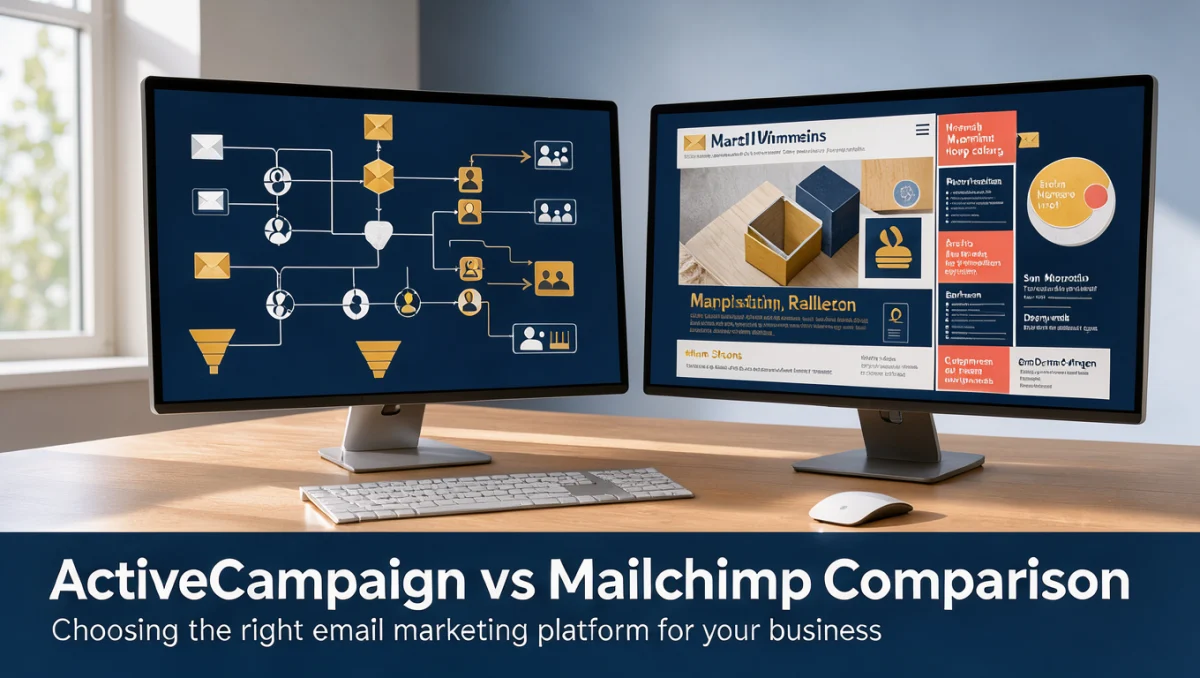
Summary judgment: We award an overall rating of 8.0/10 in this thorough activecampaign vs mailchimp head-to-head review. ActiveCampaign serves brands requiring sophisticated funnels and connected deal tracking. Conversely, Mailchimp is ideal for marketers seeking streamlined regular campaigns without dealing with multi-path logic.
| Evaluation Metric | Key Takeaways |
|---|---|
| reviewvault score | 8.0/10 |
| Best for | Businesses that rely on advanced subscriber journeys and integrated pipeline tracking |
| Not ideal for | Marketers wanting immediate single-click broadcasts devoid of workflow setup |
| Key strengths | Deep workflow configuration, dynamic profile organization, nuanced segmentation |
| What to check before buying | Tier rules for database capacity and user seat limits on official vendor sites |
Review Methodology and Scoring Criteria
Our practical evaluation benchmarks both systems across seven critical pillars: feature depth, daily usability, plan affordability, external tool compatibility, user persona match, customer support responsiveness, and overall software landscape positioning. Because provider terms, tiers, and limits change frequently, readers should verify details on product portals before enrolling. This assessment was outlined using AI tools and finalized by the Review Vault editorial staff.
The Core Difference in Plain Terms
The deciding factor between these contenders is workflow complexity versus broadcast convenience. ActiveCampaign directs its resources into behavioral paths, event-driven interactions, and direct sales pipeline alignment. Conversely, Mailchimp emphasizes quick content generation, accessible layout tools, and direct subscriber group targeting.
While growing companies frequently choose ActiveCampaign for its custom conditional triggers across prolonged customer lifecycles, solopreneurs and independent publishers lean toward Mailchimp thanks to its effortless onboarding and rich template ecosystem.
Strategic Market Positioning and Architecture

Recognizing the distinct structural philosophies of each tool prevents adopting excessive capabilities your workflow does not require.
| Platform | Ideal Audience | Primary Strength | Primary Use Case |
|---|---|---|---|
| ActiveCampaign | Organizations seeking deep branching logic | Dynamic tags and CRM pipeline synchronization | Strategies fueled by real-time user actions |
| Mailchimp | Small companies requiring rapid email creation | Visual layout builders and single-list targeting | Efforts focused on routine broadcast updates |
Underlying Database Infrastructure
ActiveCampaign relies on a contact-first data model, applying dynamic tags, historical activities, and custom data points across your complete database. In contrast, Mailchimp historically isolates subscribers inside distinct audience boundaries. This foundational split governs how easily teams execute complex cross-campaign segmentation and trace detailed buyer interactions.
Workflow Automation and Functional Scope
Both tools manage subscriber databases, generate drip communications, and track campaign deliveries, yet their execution models diverge. ActiveCampaign links communication to granular browsing habits, pipeline steps, and custom actions, whereas Mailchimp focuses on standard sequential autoresponders and visual formatting.
Conditional Logic vs. Linear Journeys
ActiveCampaign provides an expansive visual builder incorporating split testing, wait conditions, and event objectives directly into single operational flows. Marketers easily funnel subscribers using interaction history or custom metrics. Mailchimp offers clear, linear paths for onboarding series and order notifications, making it a reliable solution whenever complex if-then logic is unnecessary.
Managing Contacts and Complex Tagging
Dynamic field shifts and automated tagging drive subscriber categorization within ActiveCampaign. In Mailchimp, users organize audiences through designated tags, groups, and isolated lists. If you manage multiple distinct brands, consult the official Mailchimp pricing page to see how multi-list structures influence your ongoing subscription cost.
Interface Experience and Daily Usability
The operational curve directly dictates how quickly staff can adopt a tool and stay productive. Mailchimp provides an intuitive drag-and-drop builder engineered for prompt deployment without specialized skills. ActiveCampaign offers a capable interface, yet its extensive preference panels and branching options require a steeper learning investment.
Content Design Systems
Creating visual content inside Mailchimp is straightforward, letting marketers assemble buttons, copy sections, and visuals with direct live previews. ActiveCampaign also includes flexible visual builders, though its configuration involves integrating those layouts into broader behavioral funnels. For simple weekly updates, Mailchimp remains notably faster to set up.
Dispatching Campaigns
Mailchimp guides users through a clear, stepwise path covering target lists, sender details, subject headlines, and content previews. ActiveCampaign provides similar one-off delivery tools but prompts users to link messages into existing nurture journeys. Unprepared beginners in ActiveCampaign should review their trigger parameters to prevent endless message triggers.
Subscription Models and Investment Value

Both vendors employ recurring subscription plans that scale based on total database size and feature tiers. In this software category, prices usually rise according to tracked contacts, total dispatches, or team seats.
Underlying Cost Factors
Certain marketing tools calculate plan tiers based on stored contact counts rather than active mailable subscribers, meaning unsubscribed profiles can contribute to billing thresholds. Review the official ActiveCampaign pricing page to check how inactive contacts alter tier limits. Likewise, verify the official Mailchimp pricing page to understand how duplicate emails across multiple audiences affect your invoice.
| Key Factor to Verify | Underlying Importance | Most Impacted User Group |
|---|---|---|
| Database billing rules | Determines if non-mailable contacts generate costs | Operations facing fluctuating seasonal contact numbers |
| User access boundaries | Adding team members might force tier upgrades | Marketing departments and expanding external agencies |
| Monthly delivery ceilings | Sending regular emails can exhaust plan allowances | E-commerce brands and high-frequency publishers |
External Ecosystems and Data Syncing
Smooth connection with third-party storefronts, analytical suites, and payment tools keeps your lead data coherent. ActiveCampaign connects deeply with CRM networks and webhooks to record buyer movements, while Mailchimp offers fast native bridges to well-known e-commerce storefronts, website creators, and social advertising channels.
Bi-Directional Database Updates
Eliminating manual spreadsheet uploads requires direct background syncing between your shopping platform and email software. When researching connections, visit the official ActiveCampaign portal to verify field-mapping support for your specific software stack, and check the official Mailchimp website to evaluate abandoned checkout tracking and purchase triggers.
Matching Platforms to Business Needs
Software investment pays off when organizational requirements align with platform strengths. What suits an independent shop sending seasonal dispatches may fall short for an enterprise managing B2B lead lifecycles.
Independent Publishers and Solo Operators
Writers and boutique businesses usually achieve greater value from Mailchimp due to its accessible layouts and minimal technical burden. When your business model focuses purely on occasional editorial newsletters, Mailchimp avoids unnecessary complexity.
B2B Operations and Scaling Businesses
ActiveCampaign provides significant utility for service companies, consultants, and multi-channel retailers requiring custom lead scoring and automated sales funnels. Teams managing multi-stage buyer interactions gain clear visibility through ActiveCampaign's comprehensive contact activity records.
When Neither Tool Fits
Large corporations requiring internal servers, custom database architecture, or specialized corporate compliance may find these software-as-a-service options too rigid. Specialized enterprise marketing software provides superior options for heavy governance demands.
Customer Support and Guidance Options
Prompt technical assistance is essential when configuring detailed funnels or debugging domain authentication. Marketing platform providers frequently align support options, live chat accessibility, and response times with individual account tiers.
Checking Support Entitlements
Prospective customers must review the official ActiveCampaign support page to verify available communication options across plan tiers. Similarly, visit the official Mailchimp help documentation to check if phone assistance, live chat, or email tickets are included with your chosen tier to prevent roadblocks during urgent campaigns.
Industry Standing and Vendor Trajectory
Both platforms hold prominent, well-defined spaces in the marketing software landscape. Mailchimp transitioned from a simple broadcast tool into a broad marketing suite, whereas ActiveCampaign concentrated on intelligent automation and connected customer experiences. Each system serves as a reliable benchmark in its specific domain.
Decision Framework for Buyers
Choosing the right platform demands a realistic look at your operational bandwidth, communication plans, and sales model complexity. Walk through this sequence to guide your choice:
- Identify primary campaign formats: Determine whether you focus on standard regular dispatches or customized, behavior-triggered drip sequences.
- Review technical resources: Gauge if your staff can build and monitor logic trees, or if a clean visual builder meets your workflow needs.
- Forecast audience scaling: Model your expected contact list expansion over the coming year to anticipate subscription tier jumps.
- Confirm key tool integrations: Browse provider directories to make sure your cart platform, online forms, and payment processors link smoothly.
- Inspect tier restrictions: Check the official Mailchimp and ActiveCampaign pricing portals for detailed terms regarding seat limits, database thresholds, and technical support tiers.
Frequently Asked Questions
How can a team gauge automation requirements prior to purchase?
Sketch your complete communication process beforehand. If your strategy involves multiple branches, custom delay stages, and actions tied to website behavior, ActiveCampaign is designed for those needs. If your requirements stop at a linear welcome sequence followed by weekly newsletters, Mailchimp offers a faster path.
Which unexpected fees should buyers monitor?
Many providers set account pricing based on total stored profiles rather than active monthly sends. Extra expenses can also stem from additional user seats, premium integration add-ons, or third-party onboarding consultants. Checking the official terms on contact archiving helps keep recurring software costs predictable.
Is a platform switch worthwhile during sudden subscriber surges?
Moving between providers means migrating subscriber data, scrubbing unengaged users, re-authenticating domain DNS settings, and rebuilding active workflows. Migrate only if your current tool cannot deliver specific operational functions necessary for revenue, rather than moving for minor layout adjustments.
In what ways does organization size guide software choice?
Collaborative marketing units typically need granular permission controls, shared campaign editing, and integrated pipeline stages. Check administrative user policies on official vendor pages to ensure team members can collaborate without incurring mandatory account tier upgrades.
Final Assessment
| Metric | Rating /10 | Context |
|---|---|---|
| Features | 8.8/10 | Advanced branching tools and lifecycle records stand apart from standard broadcast utilities |
| Ease of Use | 8.2/10 | Mailchimp guarantees smooth template assembly while ActiveCampaign requires setup time |
| Pricing and Value | 7.2/10 | Organizations must review contact boundaries and seat pricing on official vendor sites |
| Integrations | 7.8/10 | Both provide extensive tool compatibility that teams should inspect before subscribing |
| Audience Fit | 8.5/10 | Distinct advantages for regular newsletter senders versus behavioral marketing teams |
| Support | 7.0/10 | Available contact channels depend on pricing tiers and require verification on official pages |
| Competitive Position | 8.7/10 | Both tools remain leading solutions within their respective marketing niches |
Overall Score: 8.0/10
For businesses focused on granular customer journeys, dynamic conditional messaging, and connected CRM capabilities, ActiveCampaign is the stronger option. For organizations, creators, and teams seeking rapid broadcast email production with minimal learning overhead, Mailchimp provides a dependable and streamlined environment.
Users with workflow inquiries or platform evaluation questions are welcome to reach out to the Review Vault team through our portal or follow Review Vault on social platforms for regular software breakdowns.