


reviewvault may earn a commission when you buy through links on this page, at no extra cost to you. This does not affect our ratings.
How to win the buy box with feedvisor comes down to balancing algorithmic price automation with strict seller performance standards and accurate floor pricing. At reviewvault, we analyze pricing technology to help online merchants establish sustainable strategies rather than engaging in destructive margin races.
Sellers on competitive retail channels must manage catalog health, fulfillment velocity, and dynamic competition. Automated repricing platforms adjust values based on live market conditions, but long-term success depends on your underlying account fundamentals and disciplined configuration.
Quick answer: Securing marketplace placement with Feedvisor requires setting disciplined minimum and maximum price boundaries, connecting real inventory feeds, selecting algorithmic repricing targets, and maintaining high seller fulfillment metrics. Continual catalog audits ensure price adjustments defend your operating profit while competing actively for customer traffic.
| Evaluation aspect | Details |
|---|---|
| Who this guide is for | Professional sellers, brand owners, and operations teams managing competitive marketplace catalogs |
| What you need before starting | Active seller central credentials, verified cost of goods, minimum floor margins, and updated fulfillment data |
| What you will have at the end | A structured operational routine to run algorithmic repricing and preserve profit margins |
1. How reviewvault Put This Guide Together
This guide combines what the software covered here is built to do with the reviewvault buying framework, so you can make the decision that fits your business. Plans, prices and limits change often, so we point out what to confirm on the official website before you buy. This article was researched and drafted with the help of AI tools, then reviewed and edited by the reviewvault Editorial Team.
2. Before you start
Before launching algorithmic repricing workflows, your operational foundation must be organized to avoid costly automated errors. Repricing software responds to external competition, but internal boundaries dictate whether your sales generate genuine profit.
- Accurate unit economics: Calculate landed costs including shipping, storage, and platform fees to establish true floor margins.
- Fulfillment reliability: Confirm stock availability and shipping lead times because marketplace algorithms reward reliable delivery metrics.
- Account health standing: Verify that order defect rates and pre-fulfillment cancellation rates meet marketplace guidelines.
- Official configuration review: Review configuration parameters on the official Feedvisor documentation to ensure your data fields sync properly.
Preparing this data in advance safeguards your catalog against sudden margin drops during competitive surges in E-commerce sales environments.
3. Step-by-step workflow
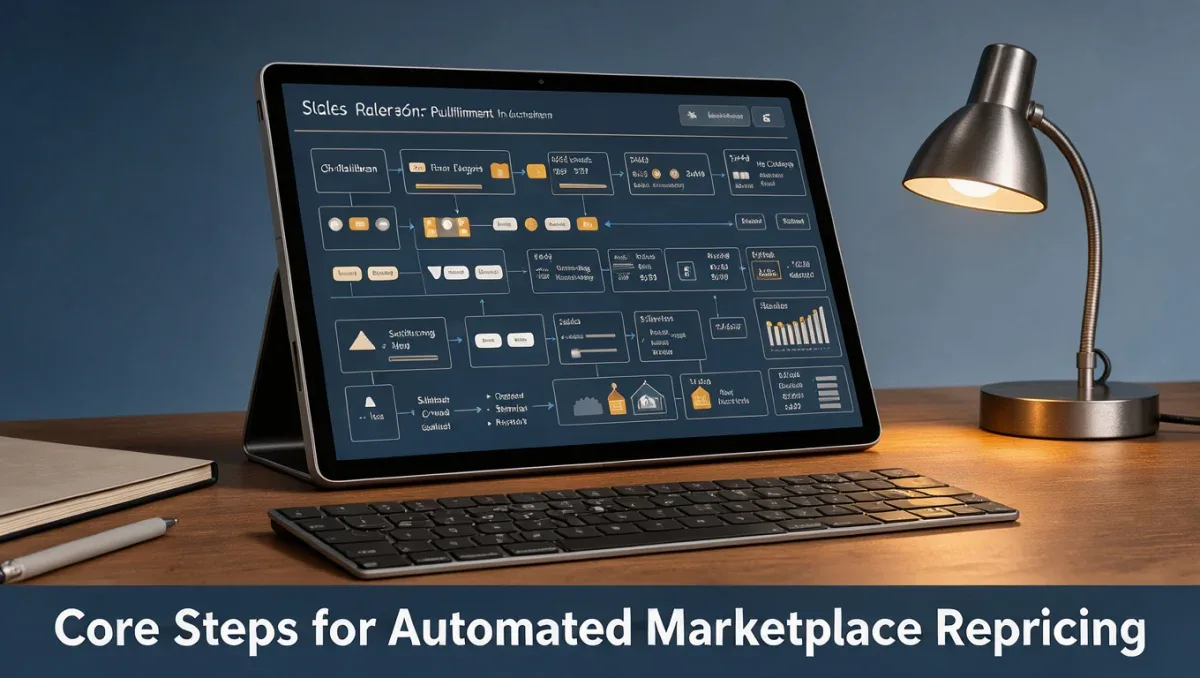
Operating an algorithmic pricing engine requires methodical setup to ensure your listings remain active, profitable, and responsive to shifting marketplace demand.
- Calculate and input strict floor and ceiling thresholds: Determine the lowest acceptable price that preserves margin and the highest realistic ceiling. Confirm on the official Feedvisor documentation how boundary rules safeguard listings from race-to-the-bottom pricing loops.
- Define listing optimization objectives: Choose strategy objectives for each inventory segment, prioritizing liquidation for slow-moving items and margin preservation for exclusive stock. Aligning business goals with algorithmic automation prevents unintended price slashing.
- Synchronize inventory and fulfillment status: Connect stock levels and fulfillment channels to the system. Understanding how to win the buy box with feedvisor requires knowing that fulfillment speed heavily influences placement eligibility.
- Monitor competitor shifts and adjust parameters: Review algorithmic reactions across key inventory lines regularly. You can assess broader merchant strategies via Review Vault to understand how modern businesses evaluate automated commercial software.
4. Your first 30 days

Establishing an automated repricing routine takes steady adjustments over your first month to build stability without risking inventory margins.
| Week | Routine to build | Why it matters |
|---|---|---|
| Week 1 | Audit SKU cost inputs and test conservative price floors | Prevents unexpected margin erosion while verifying data synchronization |
| Week 2 | Group catalog items by sales velocity and fulfillment method | Allows differentiated repricing strategies for fast movers versus slow inventory |
| Week 3 | Review repricing responsiveness during peak shopping hours | Helps assess how algorithmic pacing matches competitor inventory fluctuations |
| Week 4 | Conduct full profitability audits across active inventory segments | Verifies that increased placement translates into net operating profit |
5. Common mistakes and how to avoid them
Automated tools amplify both sound decisions and procedural oversights. Avoiding routine pitfalls keeps your repricing strategy sustainable.
- Setting unrealistic floor prices: Entering arbitrary minimum prices without accounting for platform commissions leads to sales that generate cash flow but lose profit.
- Ignoring seller metrics: Assuming software alone wins placement causes sellers to overlook late shipments or cancellations, which degrades platform standing.
- Treating all catalog items identically: Applying uniform pricing aggressive rules to rare stock sacrifices margin that could have been captured at higher prices.
- Failing to audit updates: Leaving algorithmic systems unmonitored for weeks risks missed inventory changes or unexpected supplier cost increases.
6. When to ask for help
Certain operational hurdles signal that you should seek outside expertise or consult official technical assistance rather than tweaking settings independently.
- Persistent margin compression across primary product lines despite steady sales volume.
- Catalog synchronization discrepancies where external marketplace prices differ from expected software parameters.
- Complex multi-warehouse logistics errors that cause fulfillment latency metrics to fall below marketplace standards.
- Tax classification and commercial liability uncertainties, which require input from certified accountants or legal advisors.
7. Frequently asked questions
What seller metrics influence placement alongside price?
Marketplace algorithms evaluate shipping speed, on-time delivery rates, customer feedback scores, and current inventory availability alongside product pricing. Maintaining high performance across every metric provides the repricing algorithm with the operational backing necessary to secure placement without relying solely on severe discounts.
How should sellers calculate minimum floor boundaries?
Floor boundaries should equal the complete cost of goods sold, inbound freight, marketplace referral percentages, variable fulfillment fees, and your baseline acceptable profit margin. Confirm on the official Feedvisor documentation how floor safeguards prevent listings from dropping below your calculated break-even point during fierce competitive bidding.
Why is inventory velocity important for automated pricing?
Inventory velocity determines holding expenses and storage surcharges, directly impacting overall catalog profitability. Slower items often require more flexible price boundaries to clear warehouse space, whereas fast-turning inventory can support higher margins when competitor stock runs low across primary marketplace distribution channels.
Should every product in a catalog use algorithmic repricing?
Unique private label items without direct listing competition generally benefit from manual pricing strategies or target-margin automation rather than high-frequency competitive repricing. Algorithmic engines provide the greatest utility on competitive multi-seller listings where multiple merchants contest identical product detail pages.
8. Next steps
Refining an automated retail catalog is a continuous operational discipline. To build long-term placement stability, execute these practical next steps:
- Gather comprehensive unit cost sheets for your top revenue products and recalculate minimum margin thresholds.
- Review seller account health dashboards to resolve pending customer service tickets or fulfillment delays.
- Consult the official Feedvisor resource portal to review the latest guidance on automated boundary settings and inventory sync protocols.
- Schedule weekly profitability reviews to evaluate placement percentages against net revenue gains.
Have a question about choosing software? Send it to the reviewvault team through our contact page or follow reviewvault on LinkedIn for new reviews and comparisons.